
페이지 정보
본문
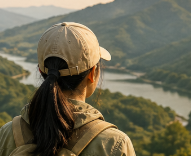
Through Ticks or Thin: Hiking, Diseases, and Climate Change in Korea
The episode revisits the joy of hiking in Korea introduced in your earlier podcast, but adds a new layer of awareness: the growing presence of disease-carrying ticks. It explains that this is not just media hype but is linked to climate change, as warmer temperatures and shorter winters allow ticks to survive longer and spread more widely.
Rather than discouraging hiking, the podcast reframes the activity as something that now requires greater mindfulness. Simple precautions—like avoiding tall grass, wearing protective clothing, and checking for ticks after hikes—are presented as practical ways to stay safe.
The core message is reflective: nature remains a source of peace and beauty, but it is also changing. As hikers, we are invited to adapt alongside it—maintaining the joy of the experience while becoming more aware and responsible in how we engage with the environment.
References:
Recorded by Deytiquez Jesus
2026.04.30
Script
Last time, I talked about the simple joy of hiking in Korea. The quiet forests, the crisp mountain air, and that feeling of escape—just you, the trail, and the rhythm of your steps. But today, I want to talk about something that slightly changes that experience… not to scare you, but to make you aware. Because the mountains are still beautiful— but they’re also changing. Recently, there’s been growing concern about ticks in Korea—especially those that can carry diseases. Now here’s the important question: Is this just media exaggeration? Not really. Researchers and public health officials are pointing to a deeper cause— climate change. Warmer temperatures and shorter winters mean ticks are surviving longer, spreading further, and becoming more active across more months of the year. In simple terms: The hiking season is expanding… but so is tick season. If you listened to my first episode, you might remember how I described hiking in Korea as almost therapeutic. And it still is. But this is where our relationship with nature becomes more complex. The same environment that gives us peace is also reacting to global changes—and sometimes, those changes show up in very small, almost invisible ways. Like a tick in tall grass. So what does this mean for hikers? It doesn’t mean you should stop hiking. It means you should hike smarter. Avoid brushing against tall grass when possible. Wear long sleeves or hiking pants, especially in dense vegetation. And after your hike—this is crucial—check your body and clothes. Ticks don’t jump or fly. They wait. And they attach quietly. What’s interesting, at least to me, is how this shifts the emotional tone of hiking. Before, it was pure escape. Now, there’s a layer of awareness—almost like a negotiation with nature. You’re still there for the beauty, the solitude, the joy… but also with a sense of responsibility. To your health. And maybe even to the environment itself. So no—the joy of hiking in Korea hasn’t disappeared. But it has evolved. And maybe that’s the real takeaway. Nature isn’t static. It responds. It adapts. And now, so do we. So the next time you’re on a trail, take it all in—the mountains, the silence, the breeze— Just… maybe also check your socks afterward. Thank you and see you next time.
첨부파일
-
Through Ticks or Thin_Hiking, Diseases, and Climate Change in Korea.m4a (5.5M)
0회 다운로드 | DATE : 2026-04-30 10:06:46