
When the River Turns Green: The Nakdong River Algae Crisis
페이지 정보

본문
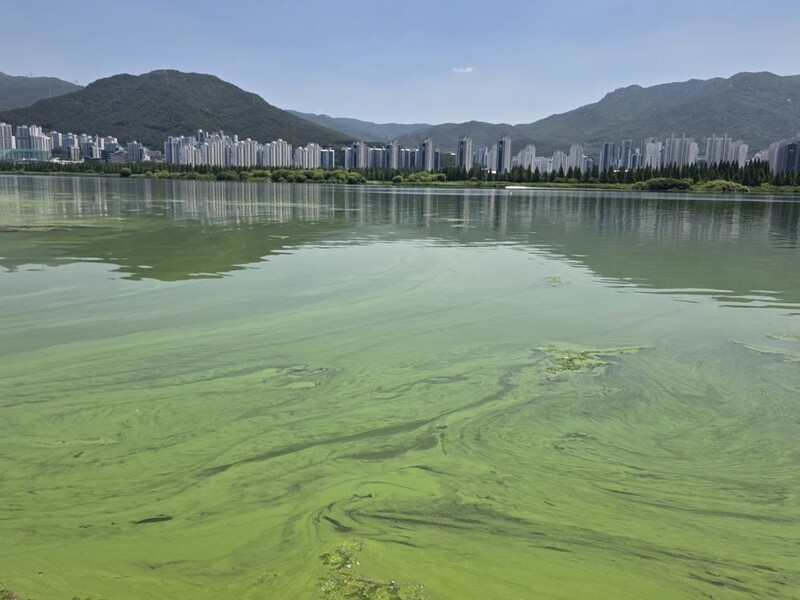
Every summer, South Korea faces a crisis that doesn't make headlines as loudly as typhoons or heatwaves — but affects the daily lives of over 13 million people. The Nakdong River, the longest river in South Korea and the primary source of drinking water for residents across the Gyeongsang provinces, turns a thick, murky green. Locals have started calling it "Nokjo Latte" — algae latte. It's a darkly humorous nickname for something deeply alarming.
The green color comes from cyanobacteria, also known as harmful blue-green algae. When temperatures rise and water flow slows, these bacteria multiply rapidly, forming dense blooms on the river's surface. In 2026, environmental groups confirmed the first algae bloom of the season in the Hapcheon reservoir area as early as late May — earlier than usual. By that point, harmful cyanobacteria levels had already exceeded official alert thresholds at multiple points along the river, including Haman, Hapcheon, and Nakdan reservoirs, prompting authorities to issue formal algae warnings. This is not a new problem — over the past five years, algae alerts on the Nakdong River have accounted for 80% of all national river alert days, totaling 781 days. That number alone reveals just how persistent and worsening this crisis has become.
The algae problem cannot be separated from climate change. Warmer temperatures accelerate the growth of cyanobacteria, and South Korea's meteorological agency has forecast that this summer's average temperatures will likely exceed seasonal norms, with June and July showing a 60% probability of being hotter than average. A hotter summer means warmer river water, which means more algae — faster and earlier than before. Environmental groups have warned that this summer's situation is expected to be even more severe, calling on the government to open reservoir gates and implement more effective countermeasures. The government, for its part, has announced a plan to reduce total phosphorus — a key nutrient driving algae growth — by 30%, with the goal of achieving Grade 1 water quality in the Nakdong River by 2030. However, environmental organizations point out that despite the promotion of a new seasonal algae management system introduced earlier this year, the spread of algae on the ground has not been contained. The gap between policy and reality remains wide.
For the more than 13 million residents who rely on the Nakdong River as their drinking water source, this is not just an environmental issue — it is a public health concern. Cyanobacteria can produce toxins harmful to humans and animals. While water treatment facilities work to filter out these toxins, many residents feel uneasy about what comes out of their taps every summer. Climate change is turning what was once a seasonal inconvenience into a year-round anxiety. The Nakdong River's green summers are a reminder that the effects of rising global temperatures are not abstract — they show up in the water we drink, the food we grow, and the rivers we once swam in as children. Reducing carbon emissions is the long-term solution, but there are immediate actions each of us can take: reducing the use of phosphorus-heavy fertilizers, disposing of wastewater responsibly, and supporting policies that prioritize river ecosystem restoration.
photo source: Busan Federation for Environmental Movement (부산환경운동연합), via Hankyoreh
- PrevKorea's Anti-Plastic Policies — Is Change Really Happening? 26.06.15
- NextThe "Gold Apple" Shock 26.06.12
댓글목록
There are no registered comments.